ESA BIC Tagus is “an open door to new ideas and new ambitions” at Técnico

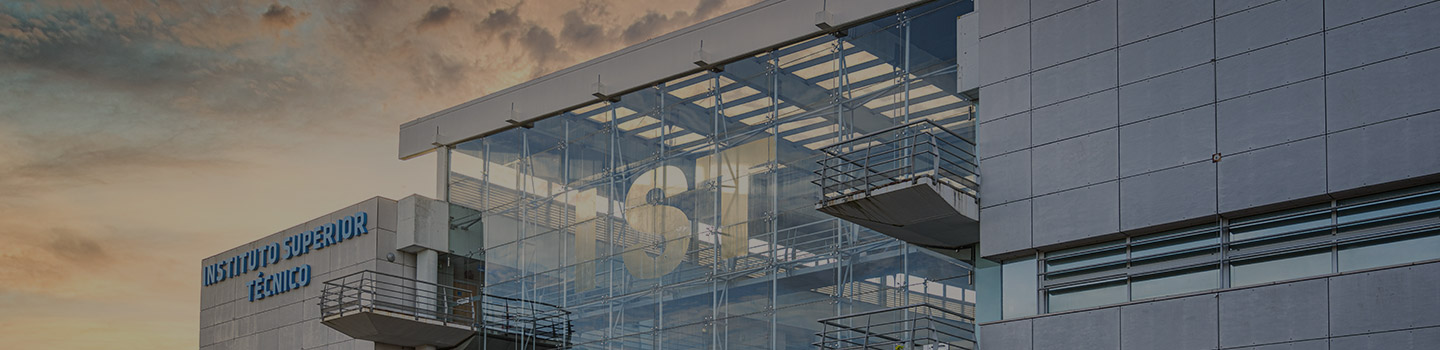
On 26 May, the Oeiras Campus of Instituto Superior Técnico hosted the official launch of ESA BIC Tagus, the new European Space Agency (ESA) incubator in Portugal. The initiative brought together researchers, students, entrepreneurs, startups, and international experts to discuss the future of the space economy and the role of new generations in shaping it.
Under the theme “Space Tech Entrepreneurship in the Artemis Generation 2026–2040”, the event marked the beginning of a strategic infrastructure dedicated to supporting space‑based entrepreneurial projects, strengthening the national capacity to transform scientific knowledge into innovation, talent into opportunity, and research into solutions with global impact.
In the opening session, the President of Instituto Superior Técnico, Rogério Colaço, highlighted that space “has long ceased to be merely a territory for scientific exploration,” becoming instead “a new economic, technological, and strategic frontier.” He stressed that ESA BIC Tagus was created precisely to support students, researchers, startups, and young entrepreneurs in transforming scientific and technological knowledge into concrete solutions for society.
“Técnico wants to be at the centre of that transformation, training talent, supporting new companies, and reinforcing Portugal’s presence in European and international space‑sector value chains,” he stated.
Sílvia Breu, Councillor of Oeiras Municipality, also emphasised the project’s strategic significance for the region and for the country, noting that ESA BIC Tagus represents “much more than the opening of an incubation centre,” and is instead “a clear sign of confidence in the capabilities of the Portuguese scientific, technological, and entrepreneurial ecosystem.”
She also announced municipal support for incubated startups that choose to establish themselves in Oeiras over the next three years, reinforcing the ambition to consolidate the municipality as a European hub for technological and space innovation.
One of the central moments of the event was the intervention of Niels Eldering, Head of the Space Solutions Section at ESA, who contextualised ESA BIC Tagus within the European network of space incubators and highlighted the historical symbolism of the “Tagus” as a point of departure for new discoveries and new markets.
“Entrepreneurs are not just explorers. They are pioneers who create new businesses, new opportunities, and new forms of collaboration,” he said, defending the role of universities as engines of innovation ecosystems capable of connecting talent, research, education, and entrepreneurship.
Teresa Fiuza, CIO of Banco Português de Fomento, presented the session “Deep Tech and Space Funding”, noting that investment in frontier technologies — such as space data, artificial intelligence, advanced communications, and quantum computing — remains “highly risky,” but has been growing consistently. She also highlighted that new financial instruments are being prepared to respond “to the real needs of the system,” strengthening support for very early development stages such as pre‑seed and seed.
Throughout the event, several projects developed by young entrepreneurs and academic teams demonstrated the growing potential of the Portuguese space ecosystem. IST NanoSatLab presented its satellite projects developed at Técnico, including missions already in orbit and future applications linked to 5G communications in space. The startup N3O showcased the development of medium‑sized satellites in Portugal, while LUMA demonstrated how Earth observation and artificial intelligence can support forest monitoring, environmental management, and carbon markets.
The panel “The Future in Space: A Dialogue with Students” placed particular emphasis on students and the new generations seeking to build careers in the European space sector. Moderated by Joana Mendonça, Vice President of Técnico, the discussion brought together international experts, researchers, and representatives of student groups for a conversation on space exploration, entrepreneurship, and technological innovation.
Miguel Fontinha, from LISAT – Lisbon’s New Satellite, and André Gonçalves, from the Rocket Experiment Division (RED) of AeroTéc, shared their experience developing satellites and rockets in a university environment, arguing that academic teams function as true laboratories for experimentation and entrepreneurship.
For students, the opportunity to participate in real missions, test hardware, and compete internationally is essential for accelerating technical skills, developing critical thinking, and laying the foundations for future space startups. “When we have the opportunity to launch a satellite or test a rocket, the team’s mindset changes completely,” said André Gonçalves, emphasising the importance of learning through experimentation and the ability to overcome failures.
Miguel Fontinha added that projects like LISAT allow students “to dream further,” opening new scientific and technological opportunities for Portugal in a rapidly evolving sector.
Former NASA Deputy Administrator and current Director of the MIT Media Lab, Dava Newman, brought an inspiring perspective on the future of space exploration, advocating for an international strategy guided by science, collaboration, and the ability to imagine long‑term goals.
She recalled that the so‑called “Artemis Generation” represents a new generation of explorers, scientists, engineers, and students who will prepare humanity’s return to the Moon and pave the way for future human missions to Mars. According to Dava Newman, the goal is not only to return to the Moon, but to develop the technologies, infrastructures, and knowledge necessary to enable humanity to become, in the future, an interplanetary species.
“Space forces us to think decades ahead,” she said, arguing that space exploration remains one of the world’s greatest platforms for scientific, technological, and diplomatic innovation.
Manuel Heitor, professor at Técnico and former Minister for Science, Technology and Higher Education, also stressed the need to create a European culture more open to risk, experimentation, and entrepreneurship, arguing that “space forces us to learn to fail” and that innovation ecosystems depend on the ability to transform failures into learning and growth.
The event, organised in partnership with MIT Portugal, concluded with a message of collective ambition for the future of the space sector in Portugal, reinforcing the importance of creating conditions for new generations of researchers, engineers, and entrepreneurs to develop solutions with global impact from within the country.
“May ESA BIC Tagus be an open door to new ideas, new companies, and new ambitions, and may we, from this campus in Oeiras, help build the future of space from Portugal to the world,” concluded Rogério Colaço.
ESA BIC Tagus is coordinated by Instituto Superior Técnico, through Técnico Venture Lab, in partnership with Taguspark, Escola do Mar dos Açores, Oeiras Municipality, CEiiA, and Vieira de Almeida & Associados, integrating the European network of ESA incubators dedicated to the development of startups and space technologies with global application potential.