PIC Challenge Day recognises projects by Industrial Engineering and Management students

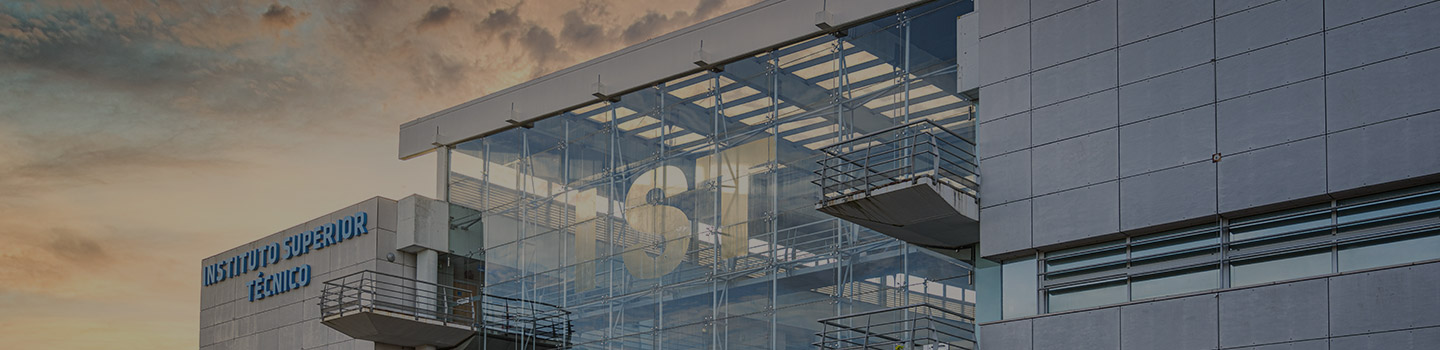
The 2nd edition of the PIC Challenge Day brought together, on 26 June at Instituto Superior Técnico’s Campus Oeiras, the five best projects developed as part of the 1st Cycle Integrative Project (PIC) of the Bachelor’s in Industrial Engineering and Management (LEGI). In front of a panel made up of representatives from the companies Kearney and Kaizen Institute, students presented solutions to real-world challenges, putting to the test not only the technical quality of their projects but also their ability to communicate and defend their ideas.
After an initial academic assessment carried out over the course of the semester, the top-rated projects were selected for this final stage. For Tânia Varela, coordinator of the Bachelor’s in Industrial Engineering and Management (LEGI), this edition showed significant progress: “You can see more applied work, more collaboration with companies and greater depth, a slightly more committed and thorough analysis.”
The professor believes this progress also stems from students being closer to the business context. “They end up much more aware of what the market is actually looking for in practice, and of what they themselves can bring to the market,” she explained, also noting that direct contact with outside professionals benefits students and companies alike. “Students always gain from hearing feedback from people on the ground.”
Among the five finalist projects, the panel singled out the work developed by Joana Queirós, Rodrigo Silva, Luísa Miranda and Rita Costa, focused on optimising EMEL’s tow-truck dispatch system. The team developed a platform capable of cutting the average response time to illegal parking situations from 34 to around 8 minutes, using optimisation models, traffic analysis and algorithms implemented in Python.
“The problem isn’t preventing badly parked cars from existing, but being able to resolve those situations much faster,” explained Joana Queirós. The system developed takes into account factors such as the location of tow trucks, traffic, schedules and the history of past occurrences, enabling dynamic management of operations. “We managed to cut the average time by almost 75%, which is a very significant impact.”
For the student, the project was a demanding challenge but also an opportunity to apply knowledge to a concrete problem. “It’s a course that demands a lot of self-discipline and independence. It was challenging at the start, but we ended up building a solution we’re proud of.” The next goal, she adds, is to present the work to EMEL itself and explore the potential of the solution they developed.
More than a competition, PIC Challenge Day seeks to bring students closer to professional reality. Presenting in front of company representatives was, for many, a first contact with a context similar to what they’ll encounter in the job market.
That was one of the key benefits highlighted by Leonor Vasconcelos, one of the finalist students, whose group presented a project on sustainable solutions for last-mile logistics in Lisbon. “It forces us to prepare a different kind of presentation from the ones we do for professors. We’re pitching a proposal to people from the market, and that helps us build confidence.”
At the closing session, the programme’s co-coordinator, António Ribeiro, congratulated all participants and encouraged them not to let their projects end with the course’s assessment. “Don’t think of this as ‘the PIC is over today.’ Keep exploring these ideas, because sometimes that’s exactly how it happens — interesting projects come out of university, and then you go on to develop them and your life changes.”
Created to strengthen the connection between Técnico and the business community, PIC Challenge Day has established itself as a space for recognising the work developed by students and bringing academic training closer to industry challenges. As Tânia Varela sums up, the initiative was born precisely out of that desire to build bridges: “It’s good for students, it’s good for companies, and everyone always gains from this exchange.”